
 Yorba Linda: (714) 485-2038
 support@invisahair.com
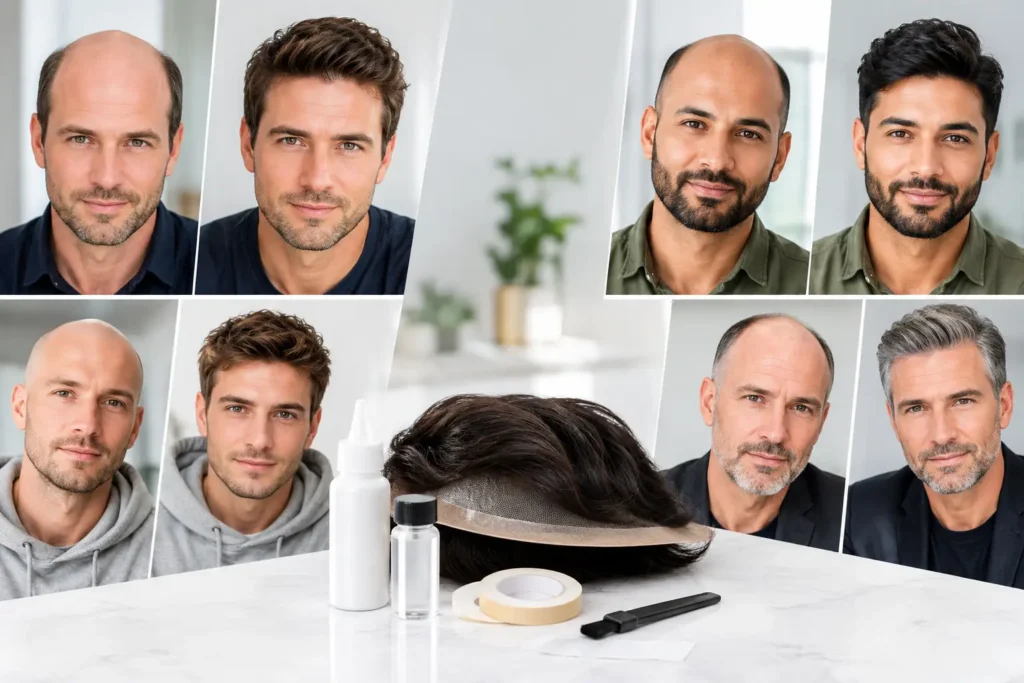
A hair system can be cut, colored, and styled beautifully, but the adhesive is what determines how confident it feels from Monday morning through the weekend. The best hairpiece adhesives create a secure, comfortable connection while protecting the realism of the hairline and making maintenance manageable. The right choice is personal: your skin, lifestyle, base material, desired hold time, and daily routine all matter.
For someone new to non-surgical hair replacement, adhesive choices can feel surprisingly technical. They do not have to be. Once you understand the main categories and what affects performance, choosing the right attachment method becomes a practical part of achieving a natural-looking result.
Best Hairpiece Adhesives Start With Your Needs
There is no single adhesive that is best for every hair system wearer. A product that performs well for an active client with an all-lace system may not be the right fit for someone with sensitive skin, a full polyurethane perimeter, or a preference for frequent removal.
The first decision is usually how long you want your attachment to last. Some clients prefer a daily-wear routine, removing their system at night or every few days. Others want an extended-wear attachment that stays secure through showers, sleep, workouts, and normal daily activity until their scheduled maintenance appointment.
Skin chemistry also has a major influence. Natural oils, perspiration, humidity, skincare products, and even changes in routine can affect hold. Southern California’s warm days and active lifestyle can make this especially relevant. A person who spends time at the gym, near the coast, or outdoors may need a different adhesive approach than someone with a lower-activity routine.
The base of the hair system matters just as much. Lace is prized for a soft, realistic front hairline, but it calls for careful adhesive application and removal. Polyurethane bases offer a smooth surface that works especially well with tape or liquid bond. Hybrid systems can combine materials, allowing a specialist to use different attachment methods in different areas for comfort and natural movement.
The Main Types of Hairpiece Adhesives
Adhesive tapes
Hair system tapes are a popular choice because they are clean, efficient, and easy to place with precision. They are available in different hold strengths, from short-term strips to extended-wear options. Tape is often applied around the perimeter of a system, where it creates a secure bond without adding unnecessary bulk.
For many wearers, tape is a dependable option for the sides and back of the system. It can also work at the front hairline, although the tape must be selected and positioned carefully to preserve a natural appearance. A visible edge, excess shine, or tape placed too close to the hairline can affect the illusion, particularly under direct light.
Tape can be an excellent fit for clients who value consistency and clean application. The trade-off is that removal still requires patience and the proper release product. Pulling a system away too quickly can stress delicate lace or leave residue behind.
Liquid adhesives
Liquid adhesives are commonly used to create a close, natural-looking attachment, especially at a lace front hairline. They are applied in thin, controlled layers and allowed to become tacky before the system is placed. When handled correctly, a liquid bond can offer an impressive balance of hold and realism.
This category includes water-based formulas and stronger acrylic-style bonds. Water-based options are often favored by people who want a gentler-feeling application and a lower-shine finish. Stronger bonds may suit extended wear and demanding routines, but they generally require more detailed cleanup at maintenance time.
Application technique makes a real difference. Thick layers do not create a better hold. In fact, they can take longer to dry, appear shiny, and increase the chance of adhesive spreading into the hair. Several very thin, fully dried layers are usually more reliable than one heavy coat.
Combination attachment methods
Many of the most natural and comfortable installations use both tape and liquid adhesive. For example, a system may be secured with tape along the sides and back for dependable hold, while a carefully applied liquid adhesive creates a softer, less detectable front hairline.
This approach allows the attachment method to match the needs of each area rather than forcing one product to do every job. It is particularly useful for clients who want a refined hairline while maintaining practical durability across the rest of the system.
Daily-wear adhesives and temporary options
Daily-wear adhesives are designed for flexibility. They can be a good choice for people who prefer to remove and clean their system more often, as well as those easing into hair replacement for the first time. They may offer less long-term hold than extended-wear formulas, but that is not necessarily a drawback.
Frequent removal gives some clients more control over their routine and may simplify scalp cleansing. The best option depends on what feels comfortable and sustainable for your lifestyle, not simply on which adhesive promises the longest hold.
How to Choose the Right Hold Strength
A stronger adhesive is not automatically better. Very aggressive hold can be helpful for certain base materials and highly active routines, but it can also make maintenance more involved. The goal is reliable attachment that feels comfortable, looks natural, and can be removed without unnecessary stress on your scalp or system.
Consider how often you exercise, how much you perspire, whether you swim, and how regularly you want maintenance. Also think about the areas that need the most support. Some clients experience more movement at the nape, temples, or front edge, while others need a solution that accommodates a particularly sensitive hairline.
Your skin should always guide the decision. If you have a history of sensitivity, redness, or irritation from adhesives, a patch test and professional guidance are smart first steps. Even a high-quality adhesive can be unsuitable if it does not agree with your skin. Comfort is part of confidence, not an afterthought.
Preparation Is What Makes Adhesive Work
Even the best hairpiece adhesives cannot perform at their best on an unprepared scalp. Before installation, the attachment area should be clean, dry, and free of oil, sweat, lotion, and leftover adhesive. Hairline products, moisturizers, and some sunscreens can weaken a bond if they migrate into the attachment area.
A properly prepared system base matters too. Any residue left on lace or polyurethane can interfere with the next installation and make the system look less refined. Regular cleaning also helps preserve the material and keeps the hair moving naturally.
Timing is another detail that matters. Adhesive needs the right amount of drying time before the system is placed. Setting it too early or too late can weaken the hold. This is one reason professional installation is valuable: experienced specialists know how to adjust preparation, product selection, and application technique based on the individual client.
Protecting a Natural Hairline Between Appointments
A natural hairline is not only about the adhesive used on installation day. It is also influenced by how you care for the system afterward. Avoid picking at the edge or repeatedly pressing it down with unclean hands. If an area begins to lift, it is better to address it promptly than to keep pushing it back into place, which can spread residue and make correction more difficult.
Be mindful when styling. Directing a blow dryer at a lifted edge, using heavy styling products near the hairline, or brushing aggressively at the front can compromise the attachment. Use styling products thoughtfully and keep them away from the bonded perimeter whenever possible.
Maintenance appointments are also an opportunity to assess how the adhesive is performing. If you consistently experience early lifting, discomfort, residue buildup, or changes in your scalp, the answer may be a different attachment strategy rather than simply adding more adhesive.
Why Professional Adhesive Selection Makes a Difference
Hair system attachment is equal parts product knowledge, precision, and personalization. A licensed restoration specialist can evaluate your scalp, hair system base, hairline design, activity level, and maintenance preference before recommending an approach. That level of customization helps prevent the common frustrations of weak hold, visible edges, excess shine, and difficult cleanup.
At InvisaHair, the attachment process is considered part of the complete restoration experience, not a one-size-fits-all step. The goal is to help each client leave with a system that looks natural, feels secure, and fits comfortably into real life.
The right adhesive should fade into the background of your day. When your hairline feels secure and your system feels like your own, you can focus less on checking your hair and more on showing up with confidence.
Schedule Your Free Hair Replacement Consultation at INVISAHAIR
Choosing the right adhesive is an important part of achieving a secure, comfortable, and natural-looking hair system.
At INVISAHAIR, we specialize in personalized, non-surgical men’s hair replacement solutions designed to fit your lifestyle and individual needs.
With convenient locations in Yorba Linda and Lake Forest, California, our experienced team is here to help you achieve a natural-looking hairstyle with confidence.
Ready to transform your look?
Contact INVISAHAIR today to schedule your FREE hair replacement consultation.
Visit: https://www.invisahair.com